From climate ambition to investment: financing cleaner industry
Building a low-carbon steel plant requires substantial upfront investment. Before committing funds, investors and lenders need confidence that the plant can be built, operate competitively and generate enough income over time. That assessment depends on more than the technology: energy costs, customer demand, construction risks and access to finance all matter.
For Ukraine, war-related destruction and security risks make these decisions even more difficult.
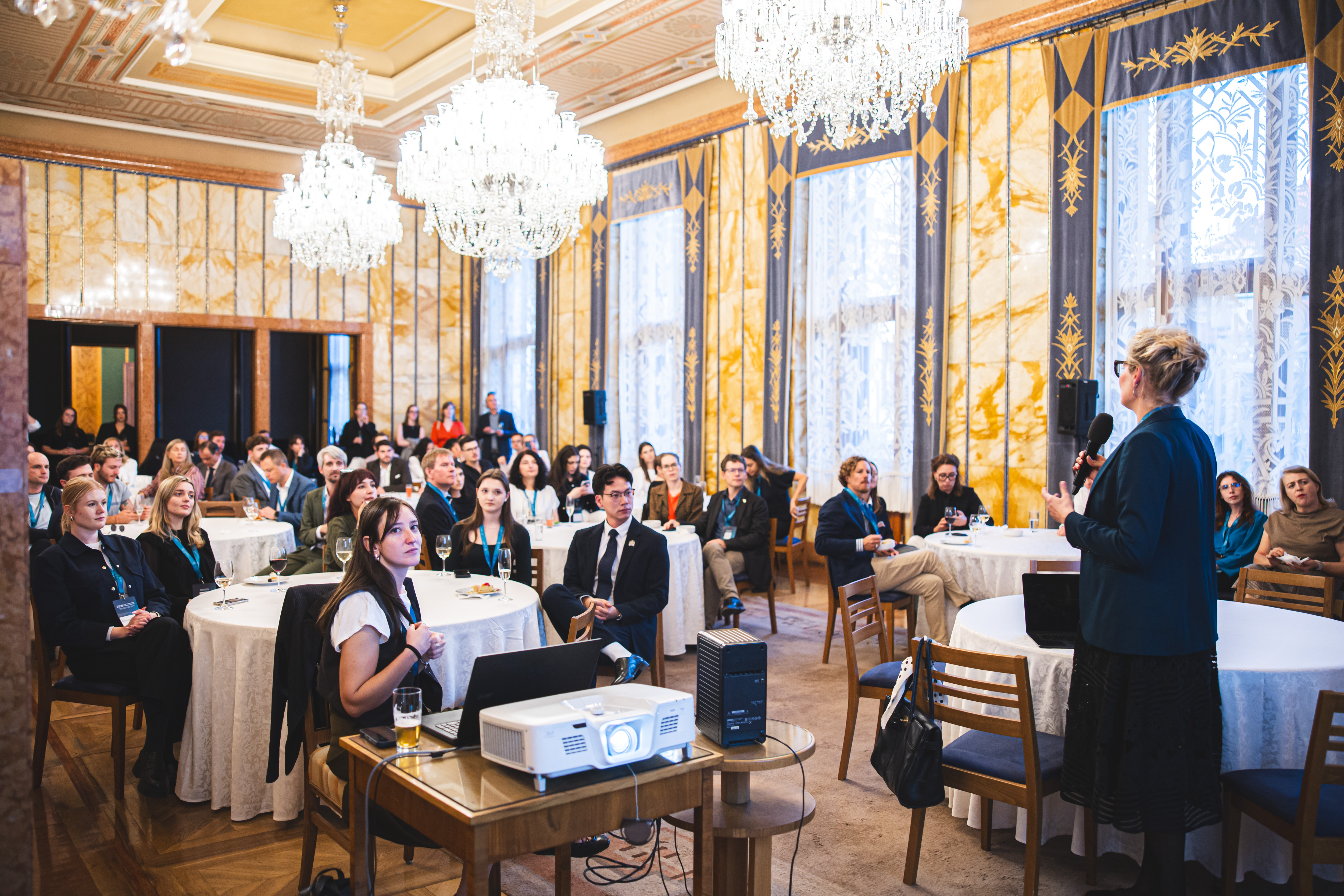
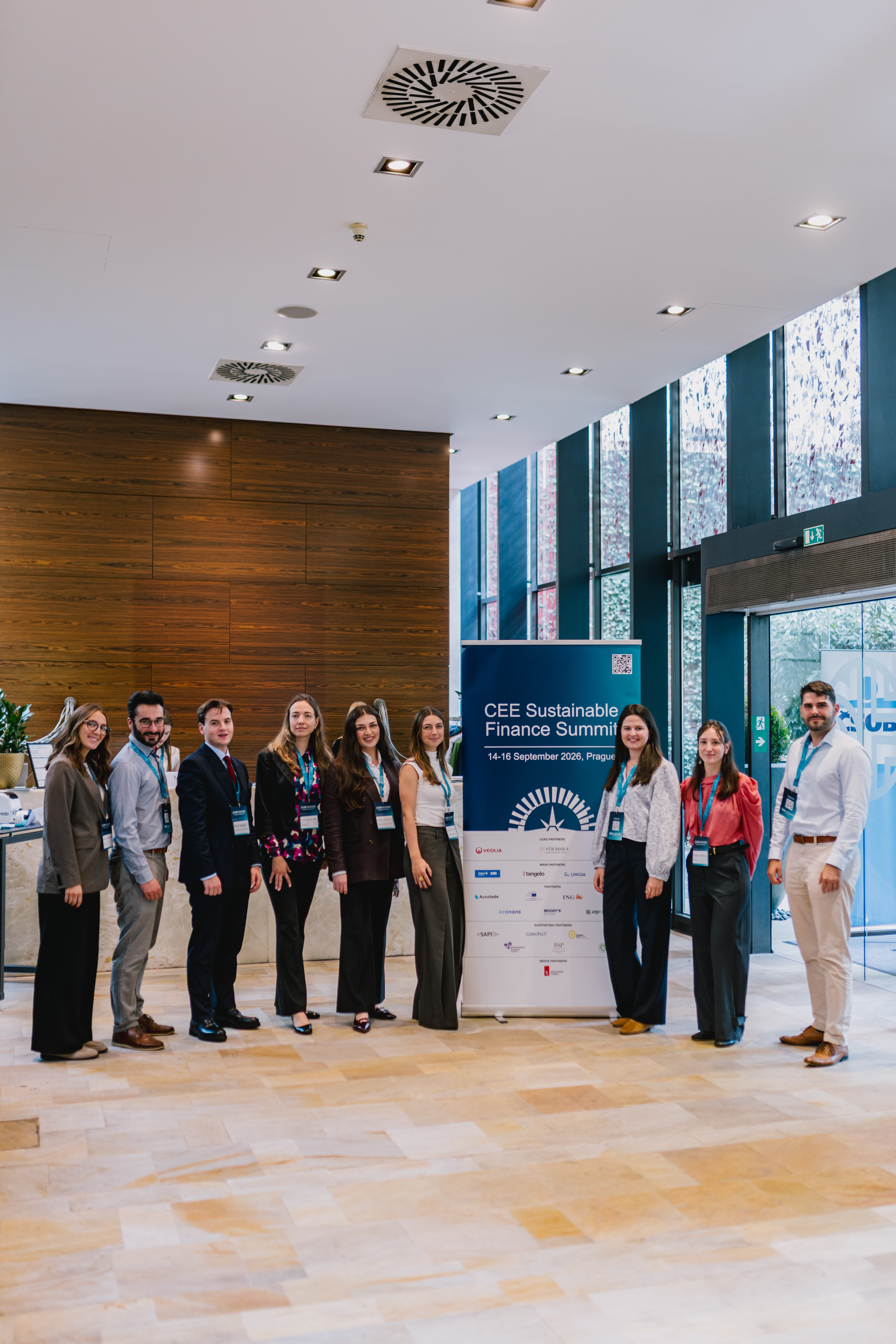
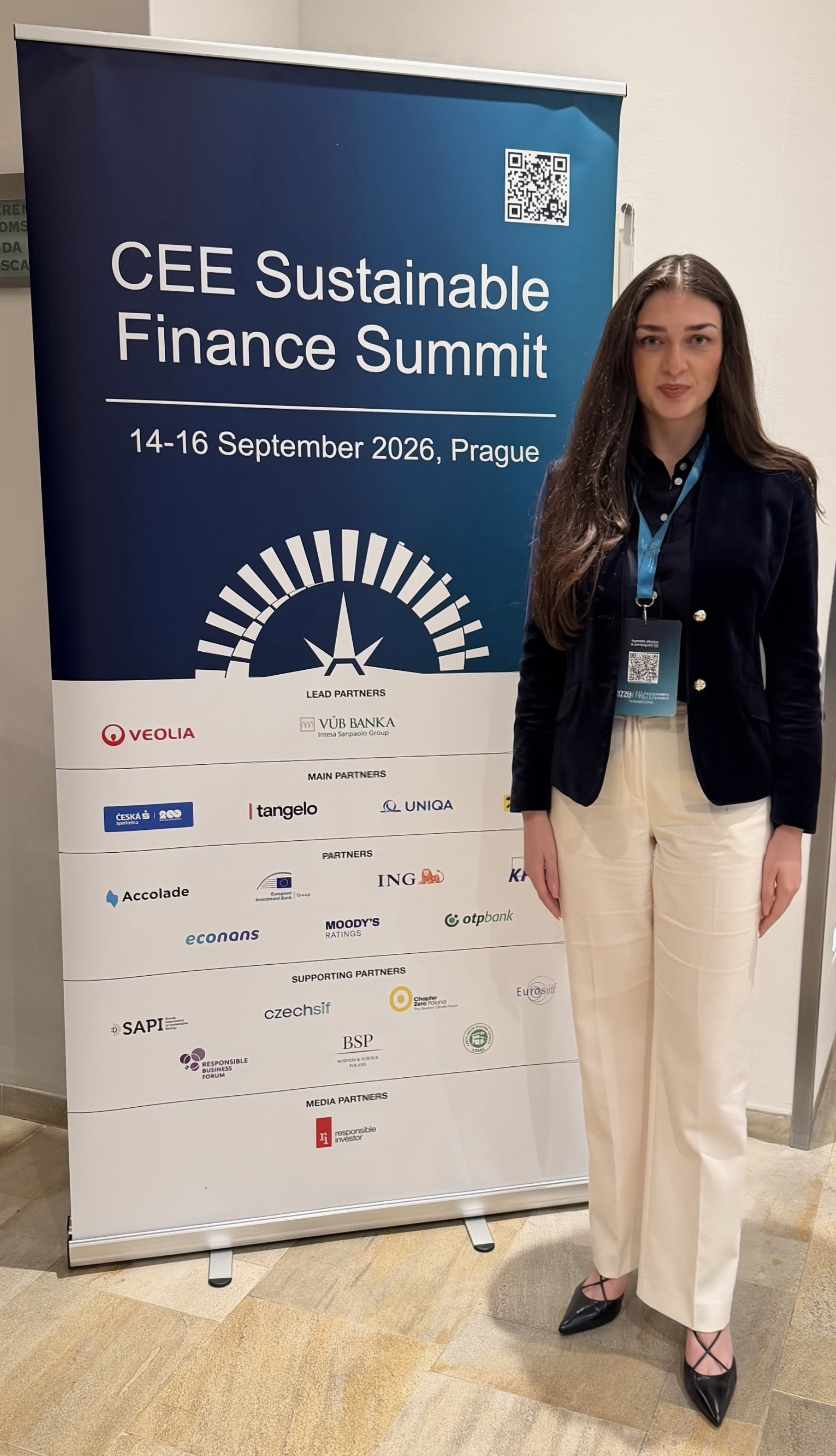
These challenges were central to Bogdana’s contribution to the summit, held on 14-16 September 2026 as part of the inaugural Climate Week Prague. The event brought together policymakers, financial institutions, companies and researchers to discuss how sustainable finance can support competitiveness, energy security, resilience and industrial transition across Central and Eastern Europe.
“The gap between climate ambition and industrial implementation is increasingly a question of who carries the risk,” Bogdana reflected.
Why a sound technical plan may not attract investment
During the main-stage closing session, Bogdana spoke about financing emissions reductions in industries such as steel, cement and chemicals, where changing production processes requires major investment.
Drawing on her current work on decarbonisation scenarios and a resource-mobilisation framework for Ukraine’s iron and steel transition, she described a hypothetical low-carbon steel project requiring around one billion euros. Its technology pathway has been modelled and its investment needs estimated. But neither establishes whether the project can secure financing. Technology alone does not make a project worth investing in. Lenders need evidence that future income will support loan repayments. Investors need to assess whether potential returns justify the risks. Customers considering long-term purchasing agreements need confidence in the product’s price, quality and delivery schedule.
These concerns are connected. A long-term customer contract can make future income more predictable, strengthening the case for lending. A public guarantee can reduce a lender’s exposure to specified losses. Financing on more favourable terms can help make a project’s overall funding package viable.
But none of these measures necessarily resolves the investment challenge on its own.
“The problem is not simply a lack of capital. The problem is fragmentation,” Bogdana explained in her pitch. “Different institutions offer different instruments, but no actor owns the full process of making the project bankable.”
Here, fragmentation means that financial support and commercial agreements may be developed separately, without a clear process for ensuring that they collectively address the project’s main risks. An available loan or guarantee is useful only if its terms meet the project’s needs and fit with the other commitments required.
The challenge is therefore not simply to bring stakeholders together. It is to align public support, private finance and commercial commitments around the specific barriers facing the project.
Preparing for Ukraine’s industrial future
For Ukraine, this work has long-term implications. Reconstruction decisions will influence whether the country develops a modern, lower-carbon industrial base aligned with future European Union markets, or invests scarce resources in carbon-intensive assets that may become uncompetitive.
Financial arrangements cannot eliminate war-related security risks. Bogdana’s contribution instead asked what can be prepared now so that credible projects do not face years of additional delays once security conditions allow investment.
That preparation includes identifying the specific barriers to financing, assessing which actors can realistically manage each risk and determining what public support and commercial commitments would be needed.
Her work in the Green Agenda team uses Ukraine’s iron and steel transition as a concrete case for examining these questions, while addressing a wider challenge facing industrial decarbonisation.
Combining finance with commercial commitments
Bogdana drew on Stegra’s green-steel project in Sweden to illustrate how different forms of support and commercial commitment can work together.
Its financing package combined equity investment, project debt, a European Union Innovation Fund grant, public and export-credit guarantees, long-term energy arrangements and binding customer agreements.
These elements served different purposes. Customer commitments helped establish a market for the steel. Energy arrangements helped provide greater certainty about a key operating requirement. Public support and guarantees complemented private investment and lending.
The combination did not eliminate the risks of delivering the project. It illustrated how financing and commercial arrangements can collectively strengthen the investment proposition.
Starting with the project’s barriers to investment
As a possible way forward, Bogdana outlined an idea for a project-level transition finance approach. Rather than creating a new fund or institution, it would establish a structured process for developing the financing and risk-sharing arrangements around a specific industrial project.
It would address four questions:
What exactly prevents investment?
Who should manage each material risk?
What is the minimum public support needed to attract private capital?
What revenue arrangements would give investors sufficient certainty?
The intended result would be a clear allocation of risks and responsibilities, a financing structure, a plan for supporting reliable revenues and a route towards a final investment decision.
Bogdana noted that further work could explore how this approach might be applied to a specific industrial project in Ukraine, elsewhere in Eastern Europe, or in the Western Balkans, and whether it could support a more systematic dialogue among public authorities, companies and financial institutions.
Connecting research with policy and practice
Bogdana attended with the Stockholm Environment Institute’s support after being selected for the inaugural Central and Eastern European Young Sustainability Leaders Programme.
Integrated into the summit, the programme brought together professionals from finance, public policy, research, local government and industry. Leadership workshops and small-group discussions offered opportunities to test ideas and learn from different sectors and national contexts.
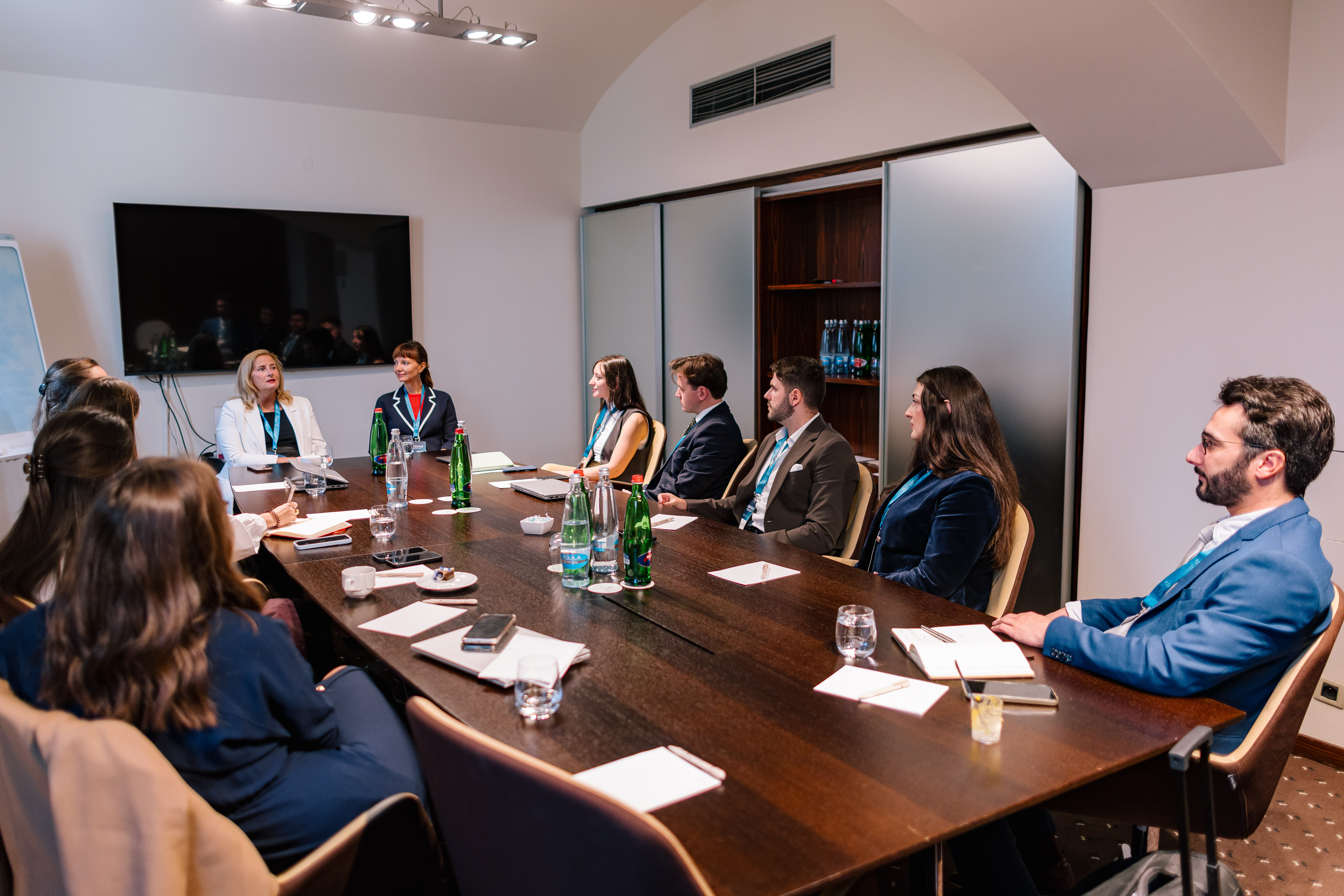
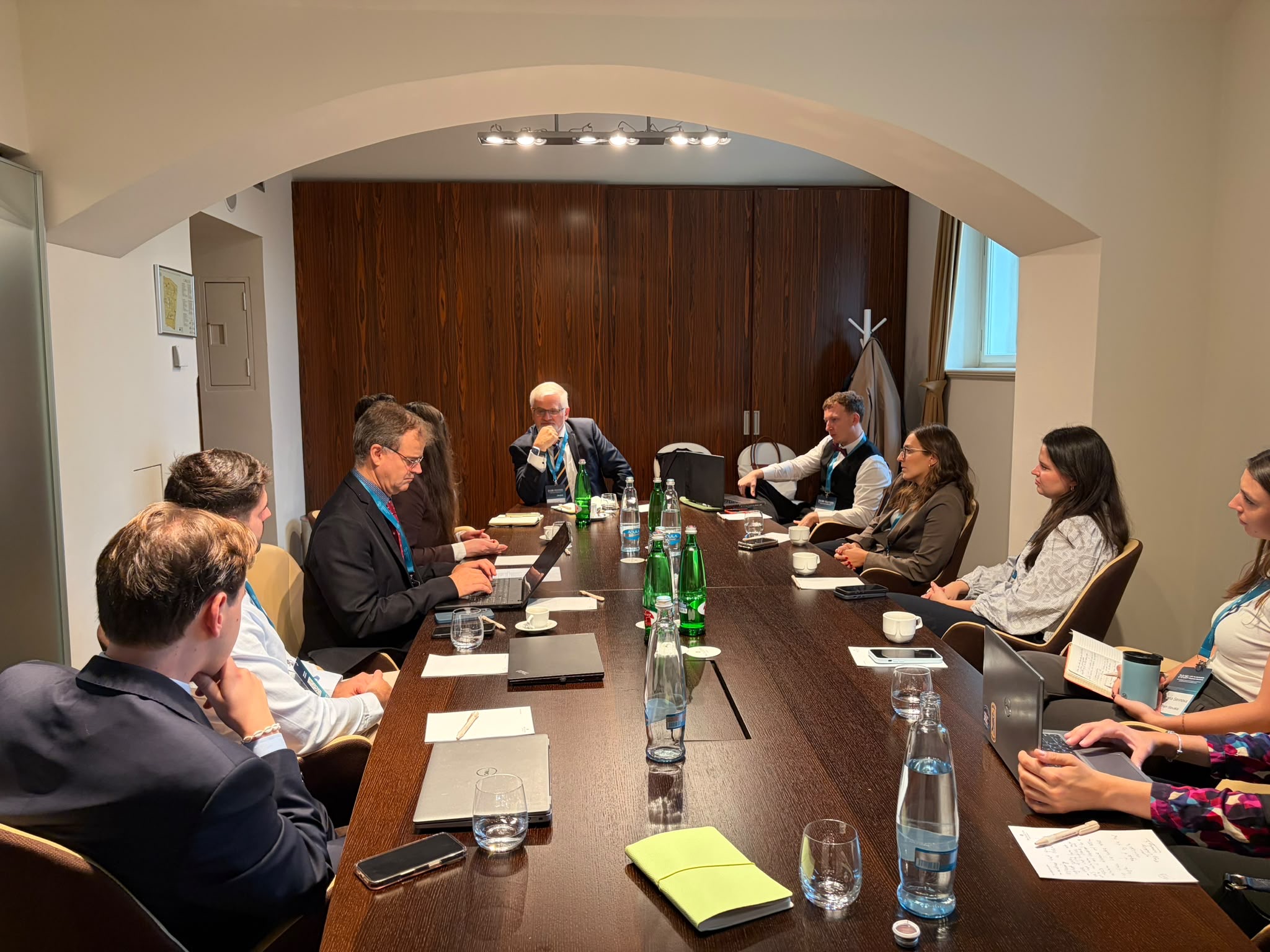
In a policy roundtable with Jan Dusík, Deputy Director-General of the European Commission’s Directorate-General for Climate Action, Bogdana discussed links between climate policy, competitiveness and security, alongside climate coalitions and challenges facing the Commission.
She also exchanged perspectives with Theia Finance Labs on how industrial transition scenarios could be linked more systematically to company-level and financial risks.
Discussions with representatives from banks, industry and research organisations helped her test assumptions underpinning her work.
Her closing message emphasised that the starting point should be the conditions needed for a project to proceed, rather than the financial products already on offer:
“Let us begin with a real project and ask: ‘What must become true for private capital to invest?’ Because sustainable finance creates impact only when it turns a transition ambition into an investable project.”